
Drones and Sustainable Agriculture: The Revolution in Crop Monitoring
Introduction
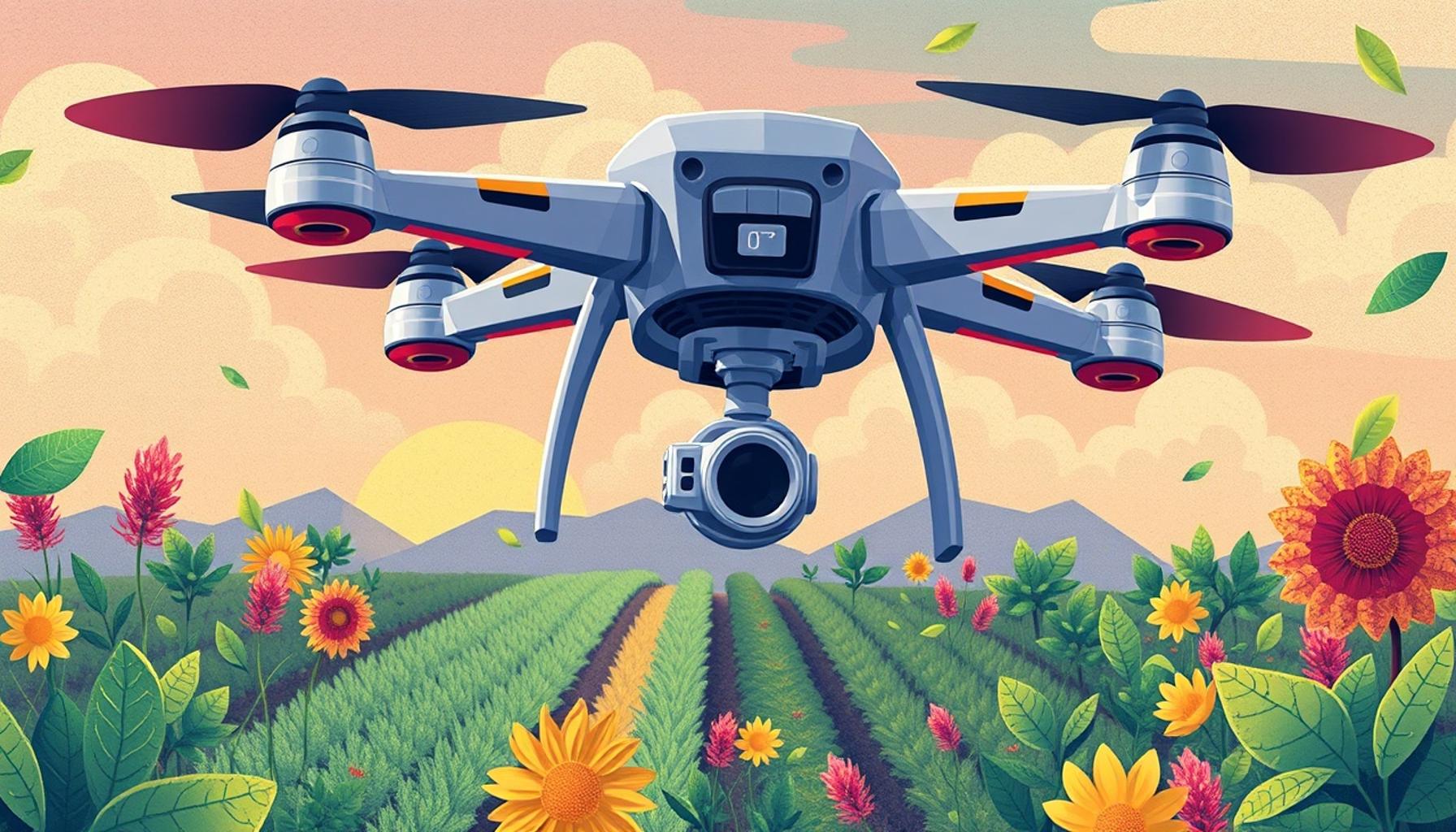
The role of drones in modern agriculture is rapidly evolving, creating groundbreaking opportunities for farmers to enhance their productivity while prioritizing sustainability. As technology progresses, these flying devices equipped with cameras and sensors are becoming indispensable tools that enable farmers across the United States to monitor, analyze, and manage their crops effectively.
One of the primary advantages of using drones in agriculture is real-time crop monitoring. For instance, farmers can deploy drones to capture high-resolution images of their fields, allowing them to assess crop health instantly. Using multispectral imaging capabilities, drones can identify areas of a field that may be suffering from disease, pests, or nutrient deficiencies long before these issues are visible to the naked eye. This capability empowers farmers to take immediate action, potentially saving a significant portion of their crop yield.
Another vital element of drone technology in farming is precision agriculture. This approach involves tailoring agricultural inputs, such as fertilizers and pesticides, to meet the distinct needs of specific areas within a field. For example, if a drone detects low nitrogen levels in a particular section, farmers can apply fertilizers precisely to that spot rather than treating the entire field. This not only saves costs but also minimizes the environmental impact of excess chemical use, promoting a healthier ecosystem.
Drones also contribute to effective soil analysis. Through comprehensive aerial assessments, they can provide crucial data regarding soil health and composition. Understanding soil quality allows farmers to implement better nutrient management strategies, leading to improved crop yields while avoiding unnecessary expenditures on inputs.
Amidst increasing environmental concerns, the use of drones supports sustainable practices that are increasingly vital for the long-term success of agriculture. They play a key role in reducing water usage. Drones help farmers optimize irrigation by showing where water is needed the most, ensuring that every drop is utilized efficiently. This is particularly important in water-scarce regions of the U.S., such as California, where efficient farming practices are essential for conserving vital resources.
Additionally, drones can help in minimizing pesticide use by enabling targeted application methods. Instead of blanket spraying, drones allow farmers to apply pesticides only where they are necessary, protecting beneficial insects and reducing harmful runoff into surrounding ecosystems. This precision helps maintain the delicate ecological balance that is crucial for sustainable farming.
Finally, drones assist in monitoring biodiversity, which is essential for maintaining healthy farming ecosystems. By tracking landscapes and wildlife interactions, farmers can implement practices that foster biodiversity, ensuring that their farming methods do not disrupt local flora and fauna.
In conclusion, the innovations brought about by drones illustrate the growing interconnection between technology and food production. Beyond merely enhancing efficiency, they pave the way for a more sustainable future in agriculture across the United States. As these practices continue to evolve, they will empower farmers to produce more food while safeguarding the environment for generations to come.
DIVE DEEPER: Click here to discover more about Shein’s sustainability efforts
Revolutionizing Crop Monitoring with Drones
Drones are not just a passing trend; they represent a seismic shift in how farmers monitor and manage their crops. By providing immediate feedback on crop conditions, drones empower farmers to make informed decisions that support not only their productivity but also environmental stewardship. This shift is particularly beneficial in the face of climate challenges, where traditional farming methods may no longer be sufficient.
One of the most significant advancements brought by drones is in the area of data collection and analysis. Equipped with advanced imaging technology, drones can gather extensive data across vast agricultural landscapes. This information can transform into actionable insights, allowing farmers to:
- Detect diseases early: For example, a farmer might use drone imagery to spot a fungal outbreak in a cornfield just days after it begins, allowing for prompt treatment and reducing crop loss.
- Monitor irrigation efficiency: Drones can assess moisture levels using infrared imaging, showing farmers where water is needed most in their fields. This capability not only conserves water but also improves crop resilience.
- Observe pest activity: By flying over fields regularly, drones can help identify the presence of pests, enabling farmers to take targeted actions before infestations spread.
The ability to gather and analyze such detailed data creates a new paradigm in crop management. Farmers can prioritize interventions based on real-time insights, leading to more effective resource allocation. For instance, instead of treating an entire field with pesticides based on guesswork, a farmer might detect a localized pest problem via drone imagery and treat only the affected area. This precision reduces chemical use and promotes a healthier environment.
Moreover, the integration of machine learning and artificial intelligence with drone technology enhances the predictive capabilities of crop monitoring. As drones collect data over time, algorithms can identify patterns and forecast potential crop issues before they arise. For farmers, this means having a proactive approach to farming rather than being reactive, which is a significant step towards sustainability.
Additionally, drones contribute to the overall efficiency of farm operations. Traditional methods of crop monitoring often require significant time and labor, diverting farmers’ attention from other crucial tasks. Drones streamline this process, enabling farmers to cover large areas in a fraction of the time it would take on foot or by vehicle. This efficiency allows farmers to allocate their time more effectively, focusing on strategies that enhance yield and sustainability.
In essence, the use of drones in agriculture is transforming how farmers engage with their land. By leveraging technology designed to monitor, analyze, and manage crops with unparalleled precision, they are not only increasing their efficiency but also adopting practices that align with the principles of sustainable agriculture. The ongoing evolution of this technology heralds a new era where addressing food security and protecting the environment can go hand in hand.
DIVE DEEPER: Click here to uncover more insights
Enhancing Precision Agriculture Through Drone Technology
As technology continues to advance, the synergy between drones and precision agriculture becomes ever more powerful. Drones are at the forefront of a transformative movement that ensures farmers can optimize their practices to meet the demands of both productivity and sustainability. Precision agriculture employs data-driven techniques to tailor farming practices to specific conditions, and drones serve as critical tools in this process.
One practical application of drones in precision agriculture is in variable rate application (VRA) of fertilizers and pesticides. By analyzing drone-captured data, farmers can determine which areas of their fields require more nutrients or protection. For instance, if drone imagery reveals a section of a soybean field with lush growth and another section that appears stunted, the farmer can apply fertilizer to the deficient area, rather than a blanket application across the entire field. This targeted approach not only maximizes the efficiency of resource use but also minimizes environmental runoff, a significant concern in agriculture today.
In addition to improving input application, drones play a vital role in crop health monitoring. By utilizing multispectral sensors, drones can assess the spectral reflectance of crops, which allows farmers to gauge crop vitality. This early detection can be crucial; for example, a farmer detecting stress in tomato plants can adjust watering schedules or pest management strategies accordingly. The quicker the response, the higher the chance of saving the affected crops, ultimately enhancing yield while ensuring sustainable practices are followed.
Workflow Integration and Accessibility
Another advantage that drones bring to the table is their ability to integrate seamlessly into existing farming workflows. With intuitive software and user-friendly interfaces, farmers of all technological backgrounds can adopt drone technology without significant hurdles. Training sessions and online resources cater to varying levels of experience, allowing farmers to harness these systems rapidly. Grounded in familiar practices, this accessibility fosters widespread adoption, which is critical for enhancing sustainability on a larger scale.
Moreover, the use of drones leads to enhanced data sharing and collaboration among farmers and agricultural specialists. Within communities, data collected from drones can be pooled, creating valuable regional insights that benefit all shareholders. By working together, farmers can share information on best practices for crop management, environmental stewardship measures, and how to mitigate emerging threats to their crops. This collaborative spirit can elevate the agricultural industry as a whole, pushing the agenda of sustainable agriculture forward.
Furthermore, drones can be equipped with real-time local weather monitoring capabilities. This feature allows farmers to receive immediate updates about climate conditions affecting their crops, such as sudden temperature changes or impending storms. With this real-time data, farmers can adjust operating plans swiftly, ensuring crops are protected while optimizing their agricultural practices relative to weather conditions.
The presence of drones in agriculture not only represents cutting-edge technology but also embodies a commitment to sustainable farming. By enabling precise interventions, promoting collaboration, and maximizing data utility, drones facilitate a farming ecosystem that is more resilient, efficient, and mindful of ecological impacts. As more farmers adopt this technology, we can anticipate a ripple effect in the way food is produced and how environmental sustainability is prioritized, ultimately shaping a greener future for agriculture in the United States and beyond.
DIVE DEEPER: Click here to discover more
Conclusion
In conclusion, the integration of drones into the realm of agriculture is a groundbreaking development that promises to redefine how we approach crop monitoring and management. As we have explored, the fusion of drone technology with precision agriculture allows farmers to make informed, data-driven decisions that not only enhance productivity but also prioritize sustainability.
Through applications like variable rate application of nutrients and real-time crop health assessments, farmers can respond proactively to the individual needs of their fields. This tailored approach helps to protect natural resources, reduce waste, and ultimately boost crop yields. Moreover, the ease with which drone technology can be incorporated into existing farming practices enhances its accessibility, empowering farmers to optimize their operations regardless of their technological background.
Furthermore, the collaborative opportunities presented by drone data sharing cultivate a community-driven approach to agricultural challenges. By working together, farmers can gain valuable insights and collective wisdom, driving innovation across entire regions. This cooperative spirit aligns perfectly with the goals of sustainable agriculture, as it emphasizes not just individual success, but shared responsibility for our environment.
As we move forward, it is essential for farmers, technologists, and policymakers to work hand in hand to fully realize the potential of drones in agriculture. By continuing to embrace these advances and fostering an environment of innovation, we can expect a future where agricultural practices are not only more productive but more sustainable, ensuring that both people and the planet thrive for generations to come.

Linda Carter
Linda Carter is a writer and expert known for producing clear, engaging, and easy-to-understand content. With solid experience guiding people in achieving their goals, she shares valuable insights and practical guidance. Her mission is to support readers in making informed choices and achieving significant progress.